
The importance of safety as an eCargo bike courier.
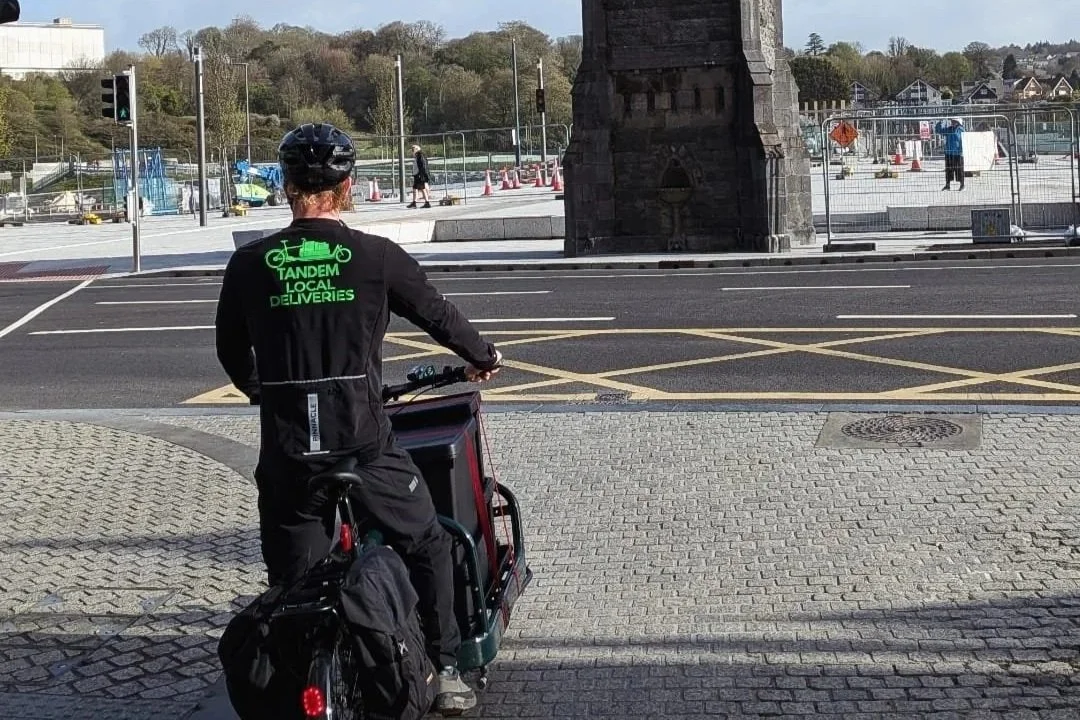
Safety as a rider-first priority
As an eCargo bike courier operating daily in urban environments, safety is the single most important factor in how we ride, plan routes, and manage deliveries. Every decision — from the bike we chose to the way we load cargo — is made with the rider’s safety in mind. The Harry vs Larry Bullitt X e-bike plays a central role in enabling this, but safe operation ultimately comes down to how the rider interacts with the bike and the city around them.
How the Bullitt X supports safer riding
The Bullitt X is designed in a way that directly benefits rider safety. Its low centre of gravity keeps the bike stable, even under heavy loads, which reduces the likelihood of losing control when turning, braking, or navigating uneven road surfaces. This gives riders more confidence and predictability in traffic.
The 25 km/h pedal assist limit naturally encourages controlled riding. It allows us to move efficiently through bike lanes without introducing the risks that come with higher speeds. In practice, this means more time to react, shorter stopping distances, and better awareness of surrounding road users.
The bike’s overall build quality — from braking systems to frame strength — ensures consistent performance under daily use. Reliability is a key safety factor: when a rider trusts their equipment, they can focus fully on the road.
Rider awareness and behaviour
Even with a well-designed bike, safety depends heavily on rider behaviour. Urban riding demands constant awareness — scanning for hazards, anticipating the actions of drivers and pedestrians, and maintaining safe positioning on the road.
Defensive riding is essential. This includes slowing at junctions, avoiding blind spots, and never assuming visibility to others. The size of the Bullitt X helps with presence on the road, but riders must still actively communicate their intentions through positioning and signalling.
Managing cargo safely
Cargo directly affects how the bike handles, so proper load management is critical. Weight must be evenly distributed and securely fastened to prevent shifting during transit. Even though the Bullitt X can carry substantial loads, pushing that limit without care can compromise braking distance and balance.
Using modular crates helps standardise this process, making it easier for riders to load consistently and safely every time.
Visibility in the urban environment
A key part of rider safety is being seen. High-quality lights, reflective gear, and clear signalling are essential, especially in low-light or high-traffic conditions. The Bullitt X’s larger profile compared to a standard bike improves visibility, but it does not replace the need for proactive visibility measures.
Learning from experienced operators
Established operators like Pedal Me and Cargonauts emphasise that safety improves with consistency and experience. Standardising on a single bike model allows riders to become deeply familiar with its handling, limits, and behaviour — which directly reduces risk over time.
Operational impact
For a rider, safety is not abstract — it affects every shift. Fewer incidents mean more consistent work, less stress, and greater confidence on the road. From a business perspective, safe riders mean fewer disruptions, lower costs, and stronger trust with customers.
As we begin operations, real-world riding experience will be critical. Tracking incidents, near-misses, and rider feedback will help us continuously improve how we operate. The goal is to build a system where safety is built into every ride, not treated as an afterthought.
